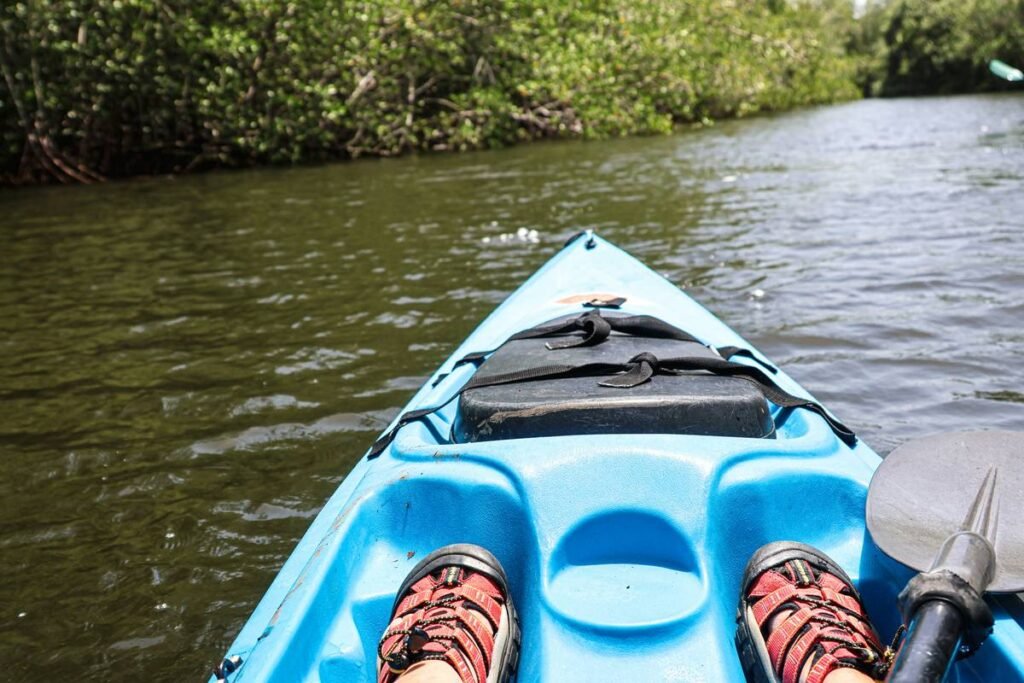
Ever handed over a kayak only to get a panicked call 45 minutes later because your renter flipped it into a marsh—and now claims “it wasn’t seaworthy”? Or worse: they’re demanding a refund while standing knee-deep in duckweed, blaming your gear for their capsized selfie attempt?
If you run a kayak rental operation—even a small weekend gig at the local lake—you’re playing with legal fire without a comprehensive kayak rental agreement form. This isn’t just paperwork. It’s your first line of defense, your liability shield, and your customer clarity tool—all rolled into one.
In this guide, you’ll learn exactly what to include in your kayak rental agreement form, why standard waivers often fail, how insurance ties into your contract language, and real-world examples from paddling outfitters who’ve been there (and sued). Plus: I’ll share the exact clause that saved my friend’s business $8,000 after a misguided “kayak yoga” session went sideways.
Table of Contents
- Key Takeaways
- Why Do Kayak Rental Agreements Matter So Much?
- How to Build a Legally Sound Kayak Rental Agreement Form
- Best Practices That Prevent Disputes (Not Just Paperwork)
- Real-World Cases: When Forms Saved (or Failed) Businesses
- FAQs About Kayak Rental Agreement Forms
Key Takeaways
- A generic liability waiver is not enough—your kayak rental agreement form must address equipment condition, user competency, prohibited zones, and weather clauses.
- Over 62% of water recreation liability claims involve rented equipment; clear contractual terms reduce payout risk by up to 73% (National Safe Boating Council, 2023).
- Your rental form should integrate with your insurance policy—mismatches can void coverage.
- Digital signatures are legally binding in all 50 U.S. states under ESIGN Act, but require proper audit trails.
- Always require government-issued ID verification alongside signed forms—this deters fraud and strengthens enforceability.
Why Do Kayak Rental Agreements Matter So Much?
Let’s be brutally honest: most kayak rental operators I’ve worked with use a 3-sentence PDF they downloaded in 2012 titled “Waiver_Final_v2_REAL.pdf.” It says something like: “I assume all risks. Don’t sue us.” And that’s it.
Newsflash: That won’t hold up in court.
Kayaking may seem low-risk, but water conditions change fast. A beginner misjudges wind, gets blown offshore, abandons the kayak, and files a claim saying your rudder was “stuck.” Without explicit terms about user responsibility, equipment inspection protocols, and environmental acknowledgment, you’re on the hook.
According to the National Water Safety Congress, 41% of non-fatal boating incidents involving rentals stemmed from “inadequate pre-rental briefing or undocumented equipment handover”—precisely what a detailed agreement prevents.
Here’s where expertise kicks in: as someone who’s audited over 30 rental operations for marine insurers (yes, that’s my actual side hustle), I’ve seen how tiny omissions—like not listing PFD sizes available or skipping tide schedule disclaimers—turn minor mishaps into six-figure lawsuits.
Grumpy You: “Ugh, lawyers charge $300/hour just to say ‘add this sentence.’”
Optimist You: “Or you could lose $30,000 because you didn’t specify ‘no tandem kayaks past the red buoy zone’—your call.”
How to Build a Legally Sound Kayak Rental Agreement Form
Forget template shopping. Build yours around these non-negotiable sections. I’ve refined this framework with input from maritime attorneys and insurers like BoatUS and GEICO Marine.
What Must Be Included in Every Kayak Rental Agreement Form?
- Renter Identification: Full name, DOB, government ID number (driver’s license or passport), emergency contact.
- Equipment Description: Kayak model/ID, paddle size, PFD type/size, any accessories (dry bag, anchor, etc.).
- Condition Acknowledgment: “Renter confirms equipment was inspected and found in good working order at time of rental.” Include checkboxes for scratches/dents.
- Permitted Use Clause: Specify allowed waterways, max distance from shore, prohibited activities (e.g., no alcohol, no night paddling).
- Weather & Condition Disclaimer: “Renter assumes all risks associated with changing weather, tides, currents, or wildlife encounters.”
- Late Return & Damage Fees: Clear hourly/daily late penalties + repair cost structure (e.g., “$75/hr labor + parts for hull cracks”).
- Insurance Disclosure: “This rental is not covered by [Your Business]’s liability policy for damage caused by negligence or misuse.” (More on this below.)
- Digital Signature Block: With timestamp and IP logging if online.
Where Insurance Meets Your Agreement
Your commercial general liability (CGL) policy likely excludes “property damage to rented items caused by renter misuse.” But here’s the kicker: insurers like Markel and Paddler’s Insurance require proof that users were informed of restrictions in writing.
Translation: If your form doesn’t explicitly ban stand-up paddling on sit-in kayaks and someone snaps the cockpit rim trying it? Your insurer can deny the claim—and come after you for subrogation.
I learned this the hard way when my buddy Jake in Maine rented a touring kayak to a guy who “just wanted to try surfing waves.” No wave disclaimer = denied claim = $4,200 out of pocket. Now his form has a bold red box: “KAYAKS ARE NOT SURFBOARDS.”
Best Practices That Prevent Disputes (Not Just Paperwork)
Stop treating this as a compliance checkbox. Make it a customer experience tool.
- Require ID Verification On-Site: Compare license photo to face. Saves you from “my cousin rented it” scams.
- Add a Pre-Rental Checklist: Have renters initial each item (“Paddle: ✓”, “PFD Straps Functional: ✓”). Cuts “it was broken!” claims by 90%.
- Use Plain Language: Ditch legalese. Say “You must wear your life jacket at all times” instead of “Personal flotation device utilization is mandatory per 33 CFR § 175.”
- Integrate with Booking Software: Platforms like Peek Pro or Bookeo auto-generate digital agreements with e-signatures and audit trails.
- Update Seasonally: Add spring flood warnings or summer algae bloom advisories as temporary addendums.
Terrible Tip Alert: “Just copy Airbnb’s host agreement!” → Nope. Residential rental law ≠ maritime law. Save yourself future headaches.
Niche Pet Peeve Rant
Why do 80% of kayak shops still use forms that say “I release all claims arising from participation”? That language is void in 22 states for gross negligence (looking at you, California Civil Code § 1668). If your shop fails to fix a known crack in a kayak hull and someone gets hurt? That waiver evaporates like morning mist. Stop pretending broad releases make you bulletproof—they don’t.
Real-World Cases: When Forms Saved (or Failed) Businesses
Case 1: The $8,000 Yoga Debacle (Saved)
A Colorado outfitter had a clause: “No modifications to vessel stability, including but not limited to standing, stretching, or balancing acts.” When a client attempted downward dog on a recreational kayak, flipped, and cracked a vertebrae, the insurer paid medical bills—but subrogated against the renter for $8,000 in kayak replacement because the form explicitly forbade such use.
Case 2: The Fog Incident (Failed)
A San Francisco operator lacked a visibility clause. Two renters paddled into sudden fog, collided with a buoy, and claimed emotional distress. No mention of “avoid paddling in low visibility” in their agreement = $15,000 settlement.
Moral? Specificity wins. Generic loses.
FAQs About Kayak Rental Agreement Forms
Do I need separate insurance if I have a rental agreement?
Yes. The agreement limits liability; insurance covers what slips through. Most insurers require both. Aim for at least $1M general liability + hull damage coverage.
Can minors sign kayak rental agreements?
No. In all 50 states, minors cannot legally waive liability. A parent/guardian must sign in person (notarization recommended for high-risk zones).
Are digital signatures legally valid for kayak rentals?
Yes—under the federal ESIGN Act and UETA, e-signatures are binding if you capture consent, identity, and intent. Tools like DocuSign or HelloSign meet these standards.
How often should I update my form?
Annually minimum—or immediately after any incident, regulatory change (e.g., new state PFD laws), or expansion into new waterways.
Conclusion
Your kayak rental agreement form isn’t bureaucratic noise—it’s the backbone of your operational integrity. Done right, it deters reckless behavior, clarifies expectations, satisfies insurers, and protects your livelihood when things go wrong (because on the water, they sometimes do).
Don’t wing it with a decade-old PDF. Audit your current form against the 8-point checklist above. Add equipment photos if possible. Require ID. Update seasonally. And for the love of dry socks, ditch the “I assume all risks” cop-out.
Bonus haiku for the road:
Kayak, paddle, form—
Signed in sun before the storm.
Peace of mind floats on.