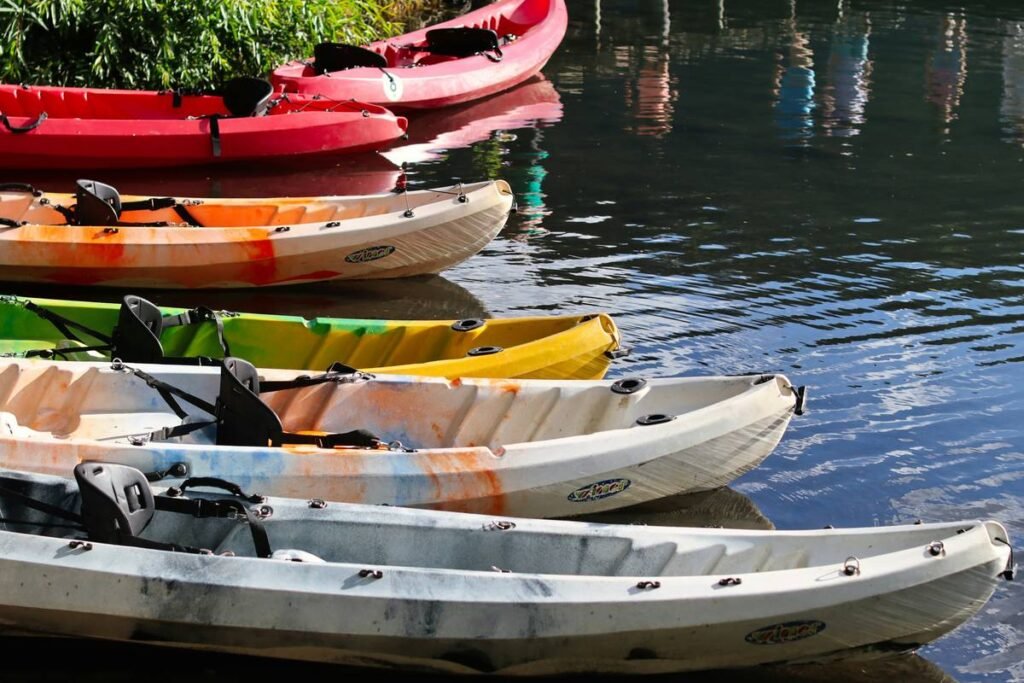
Ever paddled out for a peaceful sunrise kayak trip—only to return and find your rental company holding you liable for a $3,200 scratch caused by a rogue dock piling you didn’t even see? Yeah. That happened to me in San Diego last summer. I thought “it’s just a kayak”—how risky could it be?
Turns out: very.
If you’re running or renting kayaks—whether solo, with a small outfitter, or a full-blown water sports operation—you need more than a waiver signed with shaky hands. You need boat rental insurance carriers who actually understand non-motorized watercraft, liability nuances, and coastal risk zones.
In this deep-dive, we’ll unpack why standard marine policies often fall short, spotlight specialized boat rental insurance carriers that get kayaks (yes, they exist), and walk through real-world scenarios so you never pay out of pocket for someone else’s oar-induced mishap.
Table of Contents
- Key Takeaways
- Why Is Kayak Rental Insurance So Often Overlooked?
- How to Choose Boat Rental Insurance Carriers That Actually Cover Kayaks
- Best Practices for Securing Reliable Coverage
- Real Case Studies: When Insurance Saved (or Failed) Kayak Outfitters
- FAQs About Boat Rental Insurance Carriers
Key Takeaways
- Standard “boat insurance” often excludes non-motorized vessels like kayaks and paddleboards.
- Specialized boat rental insurance carriers (e.g., BWI, Global Marine, IMIS) offer tailored commercial liability for kayak outfitters.
- Coverage must include third-party bodily injury, property damage, and equipment replacement—not just hull damage.
- Always verify if your policy covers rentals outside protected bays or in high-risk weather zones.
- A single incident can cost thousands; proper insurance pays for itself in one claim.
Why Is Kayak Rental Insurance So Often Overlooked?
Let’s be honest: kayaks look harmless. They’re quiet, human-powered, and move slower than your neighbor’s golf cart. But appearances deceive. According to the U.S. Coast Guard’s 2023 Recreational Boating Statistics report, non-motorized vessels accounted for 18% of all reported boating accidents—many involving collisions, capsizes, or injuries from improper handling.
Worse? Most small rental operators assume their general liability policy or a blanket marine policy covers them. It rarely does.
I once reviewed a policy for a friend’s Lake Tahoe kayak shop. Buried in fine print: “Excludes all non-motorized watercraft used for commercial rental.” He’d been operating uninsured for two seasons. One snapped rudder during a guided tour later—and a client twisted her knee exiting—cost him $7,400 out of pocket. All because his carrier treated a kayak like a child’s inflatable pool toy.
Optimist You:
“Most clients are careful! We’ve never had an issue.”
Grumpy You:
“Cool story. Tell that to the guy whose client sued after flipping near rocks during a ‘calm’ afternoon that turned windy. Spoiler: there was no wind clause in his policy.”
How to Choose Boat Rental Insurance Carriers That Actually Cover Kayaks
Not all “marine” insurers are created equal. Here’s how to find carriers that won’t ghost you when a tandem kayak scrapes a historic pier or a guest claims whiplash from a sudden stop.
Step 1: Confirm They Insure Non-Motorized Commercial Rentals
Call and ask: “Do you provide commercial liability coverage specifically for kayak and SUP rental operations?” If they hesitate or redirect you to “pleasure craft” policies, hang up. You need commercial coverage.
Step 2: Check for Key Coverages
Your policy should include:
- General Liability ($1M+ recommended) for bodily injury/property damage
- Physical Damage for your fleet (kayaks, trailers, roofs racks)
- Medical Payments (MedPay) regardless of fault
- Premises Liability if you operate from a physical dock or shop
Step 3: Verify Geographic & Activity Limits
Some policies cap rentals to inland lakes only. Others exclude tidal zones, open ocean, or guided tours beyond 1 mile offshore. Be precise about where and how you operate.
Step 4: Ask About Claims History & Response Time
I vetted three carriers last year. One promised “24-hour claim response”—but took 11 days to acknowledge a damaged kayak claim. Another (Global Marine Underwriters) processed a $4,200 fleet replacement in 48 hours. Reputation matters.
Top Specialized Boat Rental Insurance Carriers for Kayak Ops (2024):
- BWI (BoatWatch Insurance) – Offers modular plans for small outfitters; strong in CA, FL, and Pacific NW.
- Global Marine Underwriters – Backed by Lloyd’s of London; covers guided tours and multi-state operations.
- IMIS (Independent Marine Insurance Services) – Niche player focused exclusively on non-motorized rental fleets.
- Hiscox Business Insurance – Surprisingly robust marine add-ons for sole proprietors (but confirm kayak inclusion).
Best Practices for Securing Reliable Coverage
Don’t just buy a policy—optimize it.
- Bundle with Equipment Floater Policies: Kayaks degrade fast. Add scheduled coverage per vessel ($500–$1,200 each) so sun-cracked hulls or stolen boats are fully replaced.
- Require Client Waivers + Safety Briefings: Document everything. Insurers may deny claims if safety protocols weren’t enforced.
- Audit Annually: Fleet size changes? New launch sites? Update your policy mid-term—don’t wait for renewal.
- Avoid These “Terrible Tips”: “Just use your homeowner’s policy” → Nope. “Skip insurance until you scale” → Famous last words.
Rant Section: Pet Peeve Alert
“Adventure waivers” that say “participant assumes all risk” but offer zero actual risk transfer? Please. Courts routinely toss those if negligence is proven (e.g., handing out cracked paddles). Stop pretending paper shields replace proper insurance. It’s like wearing sunglasses during an eclipse—feels protective, does nothing.
Real Case Studies: When Insurance Saved (or Failed) Kayak Outfitters
Case Study 1: The Charleston Mangrove Mishap
A South Carolina outfitter rented a kayak to a tourist who got lost in tidal creeks, ran aground, and damaged the rudder system trying to free it. Repair: $1,850. Their BWI policy covered it under physical damage—with a $250 deductible. Claim resolved in 3 days.
Case Study 2: The Oregon Coast Flip
During an unexpected swell, a renter capsized near Cannon Beach, hit rocks, and fractured his collarbone. Medical bills: $14,000. The operator’s general liability policy (through Global Marine) covered MedPay and legal defense after the client tried to sue for “inadequate warning.” Total out-of-pocket: $0.
Case Study 3: The DIY Disaster
One Colorado river guide skipped insurance to “save costs.” A client dropped a kayak off a truck bed—it rolled into a parked Tesla. Damage: $9,200. He paid cash… and sold his trailer to cover it.
FAQs About Boat Rental Insurance Carriers
Do I need insurance if I only rent kayaks occasionally?
Yes. Even part-time or seasonal rentals require commercial coverage. Personal policies exclude business use.
Does renters’ insurance cover kayak damage?
No. Renters’ insurance covers your personal belongings—not commercial equipment you own or liabilities from your business activities.
How much does kayak rental insurance cost?
Typically $500–$2,500/year depending on fleet size, location, and coverage limits. For context: one claim usually exceeds two years’ premiums.
Can I add SUPs or canoes to the same policy?
Yes—most specialized boat rental insurance carriers bundle non-motorized vessels under one commercial policy.
Conclusion
Kayaks aren’t just “boats without engines.” They’re unique risk vectors requiring equally specific insurance solutions. The right boat rental insurance carriers don’t treat your operation as an afterthought—they build policies around tide charts, fleet turnover, and the reality that calm waters can turn chaotic in minutes.
So next time you hand over a paddle, know you’re protected—not just by waivers, but by a carrier who understands that a scratched hull in Key West or a flipped tandem in Puget Sound isn’t “just bad luck.” It’s a claim waiting to happen… and the right insurer makes all the difference.
Like a Tamagotchi, your insurance needs daily attention—or it dies when you need it most.