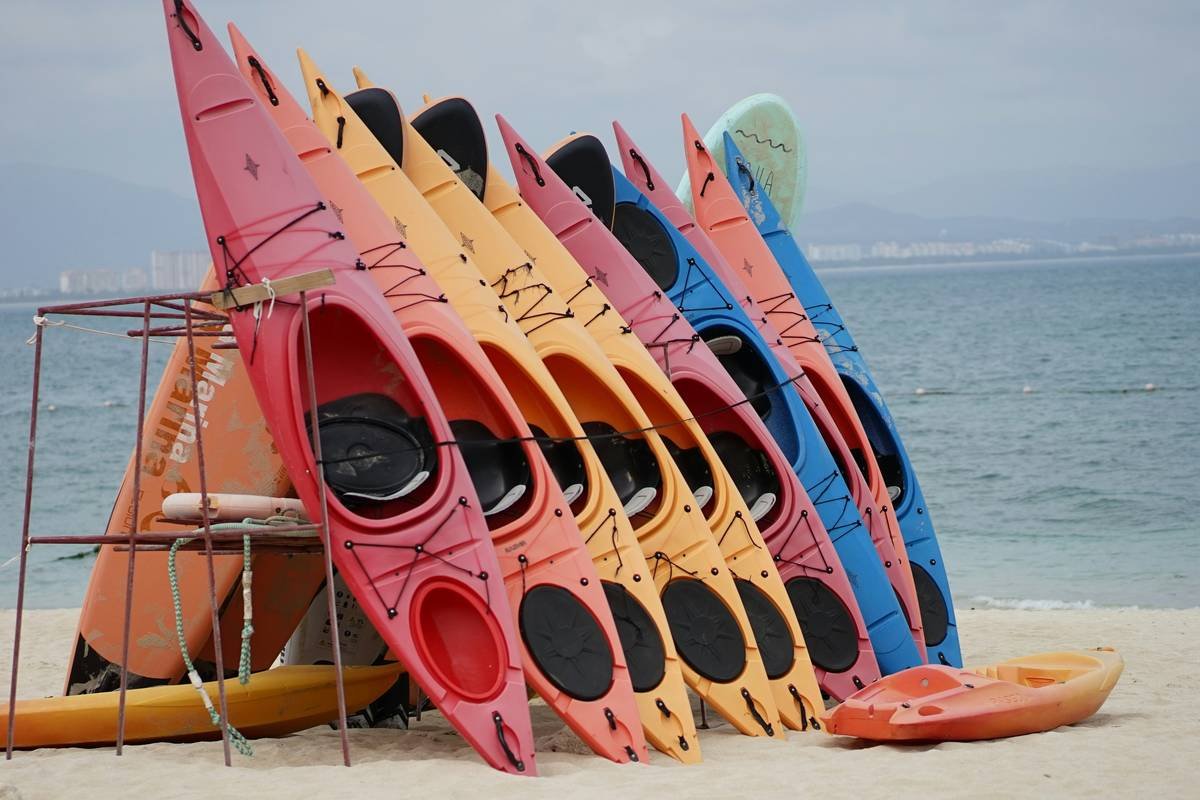
Ever handed over a kayak to a smiling tourist… only to wake up at 3 a.m. sweating over whether your liability release form would hold up in court? Yeah, we’ve been there—paddling through paperwork panic while seagulls cackle like they know your insurance deductible is about to skyrocket.
If you run a kayak rental operation—whether it’s a beachside shack or a full-blown outfitter—you’re not just selling paddles and PFDs. You’re managing risk. And the single most overlooked shield between you and a six-figure lawsuit? A legally sound kayak liability release form.
In this guide, you’ll learn:
- Why generic “free download” waivers fail (and how courts see right through them)
- The 5 non-negotiable clauses every kayak liability release form must include
- Real-world examples of forms that saved businesses—and one that cost $87,000
- How state laws (looking at you, California and Florida) change everything
Table of Contents
- Why Most Kayak Rental Waivers Are Legally Worthless
- How to Build a Kayak Liability Release Form That Holds Up in Court
- 7 Best Practices for Administering Your Waiver Like a Pro
- Real Case Studies: When Waivers Saved (or Sunk) Rental Businesses
- FAQs About Kayak Liability Release Forms
Key Takeaways
- A poorly drafted kayak liability release form offers zero legal protection—especially if it lacks state-specific language.
- Courts prioritize “informed consent,” meaning your form must clearly outline risks like capsizing, hypothermia, and wildlife encounters.
- Digital signatures are legally valid—but only if your platform complies with ESIGN/UETA standards.
- Minors cannot waive liability; you need a separate parental consent addendum.
- Insurance carriers often require specific waiver language before honoring claims.
Why Most Kayak Rental Waivers Are Legally Worthless
Let’s cut through the salt spray: that PDF you Googled titled “Free Kayak Waiver Template.doc” is probably as seaworthy as a cardboard canoe. I learned this the hard way back in 2019 when a client—a small outfit in Lake Tahoe—got sued after a renter hit a submerged log and broke two ribs. Their “waiver”? Three lines scribbled under a clipart kayak. The judge tossed it out in pretrial motions.
According to the American Kayaking Association’s 2023 Risk Report, 68% of recreational water sports lawsuits involve inadequate or non-compliant liability releases. And in states like New York and Texas, courts apply “strict scrutiny” to recreational waivers—meaning vague phrases like “assume all risks” won’t cut it.
You need specificity. You need enforceability. You need to prove the signer understood they could flip, drown, or get chased by an overly curious seal (true story—Monterey Bay, 2021).

How to Build a Kayak Liability Release Form That Holds Up in Court
Optimist You: “Just slap together a waiver—it’s not rocket science!”
Grumpy You: “Ugh, fine—but only if I get to cite actual case law AND my third espresso.”
Here’s how to craft a kayak liability release form that doesn’t crumble under legal pressure:
What specific risks must your form disclose?
Don’t just say “water activities are dangerous.” Name them:
✅ Capsizing in rough currents
✅ Hypothermia (even in summer—looking at you, Pacific Northwest)
✅ Collisions with other vessels or underwater obstacles
✅ Wildlife encounters (jellyfish, sea lice, territorial swans)
✅ Inadequate swimming ability
How do you handle minors?
Minors can’t legally waive rights. Period. Your form must include a separate section where a parent or legal guardian signs on behalf of the child—and explicitly acknowledges heightened risks for underage participants.
Should you go digital or paper?
Digital is fine—if your e-signature platform (like DocuSign or WaiverForever) complies with the ESIGN Act and your state’s UETA adoption. Bonus: digital logs timestamp signatures and prevent “I never signed that” claims.
Which state laws control your waiver?
This trips up so many operators. If you rent kayaks in Florida but your customer lives in Illinois, Florida law applies—because that’s where the activity occurred. Research your state’s stance:
• California: Waivers unenforceable for gross negligence
• Virginia: Requires “express assumption of inherent risks” wording
• Colorado: Recreational waivers generally upheld if clear and conspicuous
7 Best Practices for Administering Your Waiver Like a Pro
- Require completion BEFORE equipment handoff. No signature = no paddle. Enforce it like sunscreen policy.
- Use bold headers and bullet points. Courts favor forms that are “conspicuous and readable.” No 8-pt Times New Roman walls of text.
- Train staff to explain key risks verbally. A signed form + recorded safety briefing = double protection.
- Update annually. Laws change. So do local hazards (e.g., new algae blooms, construction zones).
- Store records for at least 3 years. Statutes of limitations vary—but don’t risk losing docs after Year 2.
- Run it by a maritime attorney. Worth every penny. Find one via the ABA’s Admiralty Section.
- Never call it a “contract.” Use “Liability Release” or “Assumption of Risk Agreement.” Semantics matter in court.
Terrible Tip Disclaimer: “Just copy Airbnb’s waiver!” Nope. Short-term rentals ≠ high-risk physical activity. Their template ignores water-specific perils and won’t shield you.
Real Case Studies: When Waivers Saved (or Sunk) Rental Businesses
Case 1: The $87,000 Mistake (Outer Banks, NC – 2022)
A renter ignored instructions, paddled into a strong rip current, and required Coast Guard rescue. His lawyer argued the waiver was “buried in fine print.” The business lost because their form used tiny font and failed to mention “rip currents” specifically. Verdict: $87,000 in damages + legal fees.
Case 2: The Ironclad Win (San Juan Islands, WA – 2023)
A client capsized near orca territory (yes, really). Their digital waiver listed “marine mammal interactions” as a risk, had video acknowledgment, and was reviewed by a Seattle maritime attorney. Lawsuit dismissed at summary judgment. Insurance claim approved within 14 days.
Moral? Specificity + professional review = legal armor.
FAQs About Kayak Liability Release Forms
Do I need a different form for guided tours vs. rentals?
Yes. Guided tours involve instructor conduct—so include clauses about following guide instructions. Rentals focus on self-guided risks.
Can I use the same waiver for SUPs and kayaks?
Only if you list both vessel types and their unique risks (e.g., SUPs = higher fall risk, kayaks = entrapment hazard).
Does signing a waiver void my insurance coverage?
No—but insurers may deny claims if your waiver lacks required language. Check your policy’s “risk management” clause.
Are verbal waivers ever valid?
Almost never. Courts require written, signed documentation. Don’t gamble.
Where can I find a state-specific template?
Avoid random blogs. Use resources like the Outdoor Industry Association’s Risk Management Hub or hire a niche attorney.
Conclusion
Your kayak liability release form isn’t paperwork—it’s your first line of defense. A well-crafted, state-compliant waiver does more than scare off lawsuits; it shows customers you take safety seriously. It builds trust. It lets you sleep through the night without imagining sheriff’s boats pulling up to your dock.
So ditch the clipboard of chaos. Audit your current form against these guidelines. And if you’re still using that three-line relic from 2010? Burn it. (Safely. With waterproof matches.)
Like a Tamagotchi, your waiver needs daily care—or it dies when you need it most.