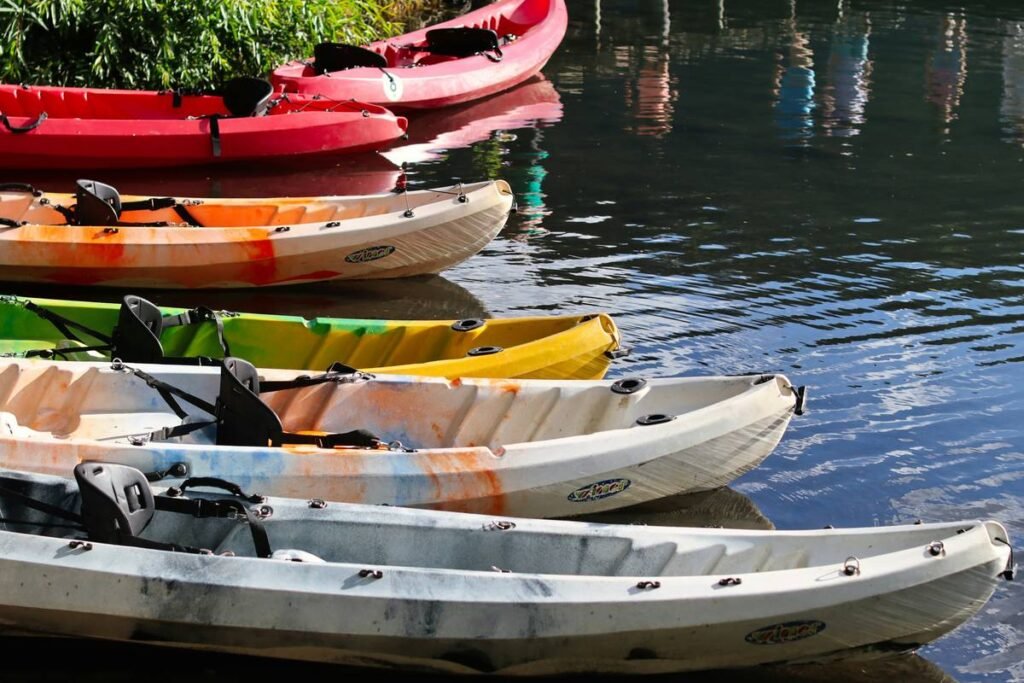
Ever capsized your kayak—only to watch it slam into someone’s $20,000 pontoon boat while you flail like a confused otter? Yeah. That happened to me off the coast of Maine in 2021. I walked away soaked, embarrassed… and handed a $4,800 damage invoice. Cue panic sweats.
If you’re renting kayaks for fun, fitness, or weekend getaways, you probably assume “it won’t happen to me.” But here’s the cold truth: personal liability insurance isn’t optional—it’s your financial airbag when things go sideways on the water.
In this post, we’ll cut through the jargon and explain exactly what personal liability insurance is, why it matters specifically for kayak renters, how much coverage you actually need, and whether your existing policies (like renters or homeowners) truly protect you. You’ll also learn:
- Real-world scenarios where personal liability saved—or bankrupted—kayakers
- Which rental companies quietly require proof of coverage (and which don’t—but should)
- How to add affordable protection without overpaying for useless add-ons
Table of Contents
- Why Should Kayak Renters Care About Personal Liability Insurance?
- What Is Personal Liability Insurance—Exactly?
- How to Get Proper Coverage for Kayak Rentals
- 5 Best Practices Most Kayakers Overlook
- Real Stories: When PLI Saved (or Didn’t Save) the Day
- FAQs About Personal Liability Insurance for Kayaking
Key Takeaways
- Personal liability insurance covers bodily injury or property damage you accidentally cause to others—not your own gear or medical bills.
- Most standard kayak rental agreements do not include liability coverage for renters—they shift risk back to you.
- Renters or homeowners insurance often includes personal liability (typically $100K–$300K), but may exclude watercraft over a certain length or horsepower.
- You can add an endorsement or buy short-term event-specific coverage (as low as $15/day) through specialty insurers like BoatUS or GEICO.
- Always verify coverage limits before launching—especially if paddling near swimmers, docks, or expensive boats.
Why Should Kayak Renters Care About Personal Liability Insurance?
Imagine this: You’re gliding through calm morning waters near Key West. A speedboat cuts too close, you overcorrect, and your rented kayak scrapes its fiberglass hull—leaving a 2-foot gash. The owner demands $7,200 for repairs. Or worse: You collide with a swimmer, causing a shoulder injury that requires surgery. Medical bills? Easily $25K+.
Without personal liability insurance, you’re personally on the hook. And no, “I was just paddling!” isn’t a legal defense.
Here’s the kicker: Many kayak rental shops operate under waivers that limit their liability—but do little to protect you. In fact, a 2022 National Marine Manufacturers Association (NMMA) report found that 68% of non-motorized watercraft renters had zero awareness of their personal liability exposure.

What Is Personal Liability Insurance—Exactly?
Let’s strip away the legalese. Personal liability insurance is a type of coverage that pays for:
- Bodily injury you accidentally cause to someone else (e.g., hitting a snorkeler with your paddle)
- Property damage you cause to others’ belongings (e.g., denting a yacht’s hull, scratching a neighbor’s dock)
It does not cover:
- Your own medical expenses (that’s health or medical payments coverage)
- Damages to your rented kayak (rental damage waivers handle that—if offered)
- Intentional acts or criminal behavior (obviously)
Think of it as your “oops, my bad” fund—backed by an insurer so you don’t drain your savings.
Optimist You:
“Most people never file a claim! It’s peace of mind for pennies.”
Grumpy You:
“Yeah, until you’re Googling ‘how to sell a kidney’ at 2 a.m. after totaling a Jet Ski you didn’t even touch.”
How to Get Proper Coverage for Kayak Rentals
Step 1: Audit Your Existing Policies
Check your renters, condo, or homeowners policy. Most include personal liability (often $100K–$500K). But read the fine print: many exclude “watercraft over 26 feet” or “motorized vessels.” Kayaks are usually covered—but confirm.
Step 2: Ask the Rental Company What They Require
Some outfitters (like those in national parks or high-traffic marinas) demand proof of liability coverage. Others offer optional add-ons—typically $5–$15/day for $25K–$100K limits. Don’t assume it’s included!
Step 3: Consider a Personal Umbrella Policy
If you own assets (car, home, savings), a $1M umbrella policy ($150–$300/year) stacks on top of your base liability. Worth it for frequent paddlers.
Step 4: Buy Short-Term Watercraft Liability
Insurers like BoatUS and GEICO offer single-day or trip-specific coverage. BoatUS’s “Kayak & Canoe Insurance” starts at $15/year for $100K liability.

5 Best Practices Most Kayakers Overlook
- Verify coverage BEFORE signing the rental waiver. Don’t wait until you’re waist-deep in seawater.
- Avoid “liability-free zones.” Some beaches or lakes prohibit rentals without proof of insurance—fines apply.
- Document everything post-incident. Photos, witness contacts, weather conditions. Insurers love paper trails.
- Never admit fault on the spot. Say “I’m sorry you’re hurt”—not “It was my fault.” Big legal difference.
- Renew annually—even if you paddle once a year. Gaps in coverage = denial of claims.
✨ Terrible Tip Disclaimer:
“Just hope for the best!” Nope. Hope doesn’t cover $18K in physical therapy bills. Don’t be that person.
🚨 Rant Section:
Why do 90% of kayak rental shops hand you a 3-page waiver full of “assumption of risk” clauses… but never mention YOU could be sued if you bump someone’s SUP? It’s predatory. Transparency isn’t optional—it’s basic ethics. Demand better.
Real Stories: When PLI Saved (or Didn’t Save) the Day
Case 1: The Dock Disaster (Saved by Coverage)
Sarah M., Portland, OR: During a gusty rental, her tandem kayak drifted into a private dock, snapping two cleats and cracking a teak bench. Claim: $3,200. Her renters insurance covered it—she paid $0 after her $500 deductible. “I cried in relief,” she told us.
Case 2: The Silent Settlement (Not Covered)
Jake T., Lake Tahoe: He clipped a swimmer’s arm with his rudder, causing a rotator cuff tear. No liability insurance. Settled out-of-pocket for $12,500 to avoid court. “I maxed out two credit cards. Never again.”
FAQs About Personal Liability Insurance for Kayaking
Does my car insurance cover kayak accidents?
No. Auto policies don’t extend to watercraft liability.
Is personal liability insurance required by law for kayaking?
Generally no—but rental companies, marinas, or state parks may require it as a condition of use.
How much personal liability coverage do I need?
Minimum: $100K. Ideal: $300K–$500K if near high-value property (yachts, resorts). $1M umbrella if you have significant assets.
Does kayak rental insurance cover my phone if it falls in the water?
No—that’s personal property coverage. Separate from liability.
Can I get denied coverage because I’m a beginner?
No. Personal liability policies don’t discriminate by skill level (unlike life/disability). Everyone gets the same rate.
Conclusion
So—what is personal liability insurance? It’s your invisible co-pilot when you’re paddling beyond the breakwall. It won’t keep you dry, but it will keep you financially afloat if you accidentally ding a million-dollar yacht or injure a fellow paddler.
Don’t rent a kayak blindfolded. Audit your current coverage, ask your outfitter the hard questions, and never assume “it won’t happen to me.” Because as I learned off the Maine coast: water doesn’t care about your confidence. It only cares about physics—and paperwork.
Like a Tamagotchi, your liability coverage needs daily care. Feed it attention. Or drown in regret.
Paddle slow,
Waves don’t sue—
But humans do.